
At Agile Masters, our mission is to empower businesses and individuals with the principles of Scrum and Agile methodologies. Through our expertise, guidance, and innovative solutions, we aim to foster collaborative, adaptive, and high-performing teams that drive successful project delivery and organizational growth.
Mission
Our current professional mission (Scrum Master / Agile Coach) is to support an organization to transform/improve its internal culture and processes around IT development on the way that this organization conquers/develops the market quicker, more efficient, and less expensive.
This successful experience gained during such transformation consists of 3 following phases.
- The first phase is the adjustment of the basic processes, experimentation and setup of best Agile tools and approaches in the scope of the team. During this phase, focus is rambling between the following areas: mid-term business vision, business analysis, UX, technical excellence (craftsmanship), DevOps and support. Moreover, it’s almost always necessary to ensure/foster the additional development of the classical Agile soft skills: self-organization, proactivity, positive mindset, transparency, experimentation, focus on the highest priority and simplicity. This step can take between 0.5 and 1 year depending on the initial maturity, process- and technical-debts. If you have the similar situation, I do really advise to refer to the MountainGoat’s blog.
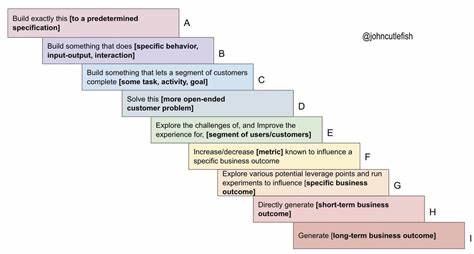
- The second phase start after the high and stable productivity and quality is achieved. It is the phase of the business impact increasing. It start with clarifying the business needs of every business request: why do we want to deliver it to the customer and how we can measure/quantify (!) the success. It is a real mind-shift for the PO, BA and stakeholders to be able to measure the business value of the feature in numbers.
- The third phase switch to the advanced level of the organizational transformation. It start as soon as we are able to identify and provide clear measurement of the business impact. The evidence-based planning and management have been done by the team, top-management, and the relevant business representatives. Starting from this maturity level, our organisation was doing the actions which were even impossible to imagine before: business change planning, business-deployment control, and business efficiency of new features measurement. It was a new level of team’s “mindfulness”. The presentation “Strategic Portfolio Management with Kanban” from Matthias Patzak helped me to clarify our process for myself.

